Flagler Street Beautification Project (New)

05-Flagler-Cars.jpg

Image courtesy of Mana Miami

Overview

The City of Miami’s Office of Capital Improvements, in partnership with the Flagler District BID and the Miami Downtown Development Authority (Miami DDA), is working to transform Flagler Street into an iconic, festival-style boulevard and enhance its operations and activities. The main objectives of this project are:

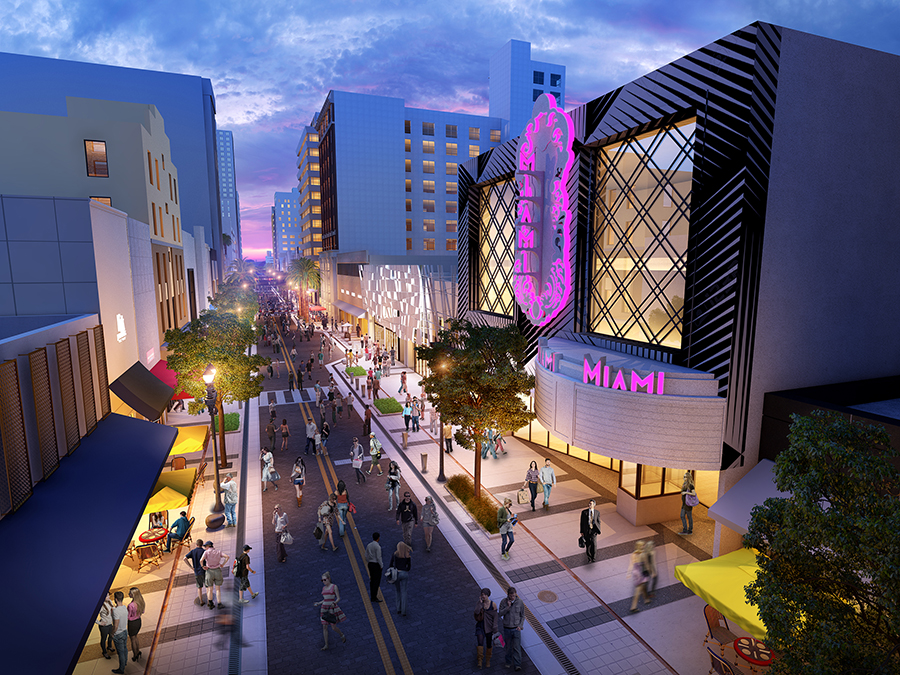
  • Create a festival street from Biscayne Boulevard to NW 1st Ave by raising the road to the same grade as the sidewalks, changing it to a curbless street, and adding pavers in the vehicular travel lanes.
  • Deliver an enriched pedestrian experience with expanded sidewalks, large shade trees, outdoor café dining, improved LED lighting, signage, public art, and seating.
  • The new corridor will have the ability to close individual blocks to vehicular traffic for community gatherings, festivals, farmer’s markets, art fairs, and family evenings throughout the year.
  • Minimize on-street parking to maximize pedestrian space and Valet parking will be available, plus you will be able to park your car anywhere along the corridor and have it returned to you at your present location.
  • Upgrade existing drainage systems to prevent flooding.
  • Install new utilities – power, gas, fiber optics – to prepare for new vertical development and avoid the street being broken up once completed.
  • Improve the quality of life through a safer and more attractive shared space providing opportunities to increase patronage to existing businesses, attract new businesses, spur economic growth, and make Flagler Street a Downtown Miami cultural and commercial destination once again.

Construction

The work will be performed simultaneously in some sections, and it will move forward from east to west, starting on Biscayne Boulevard:

  • Section A: Biscayne Boulevard to SE/NE 3rd Avenue
  • Section B: SE/NE 3rd Avenue to SE/NE 2nd Avenue
  • Section C: SE/NE 2nd Avenue to SE/NE 1st Avenue
  • Section D: SE/NE 1st Avenue to S/N Miami Avenue
  • Section E: S/N Miami Avenue to SW/NW 1st Avenue

2022.06.07-Flagler-Street-Phasing-Map-scaled.jpg

Public Information Office

The Flagler Street Public Information Office is located at 166 E. Flagler Street, right next door to the historic Olympia Theater. The office houses a great deal of project information including engineering documents, artistic renderings, and historic photos.

Wanda-Mendez.jpg

Wanda Mendez - Public Information Officer (PIO)
Contact her at (786) 285-9407 or mendez@miamidda.com


Construction Updates


Previous Construction Updates

Construction Alerts

Construction Alert 2025-07-29 113215.png


Previous Construction Alerts

History of Flagler Street

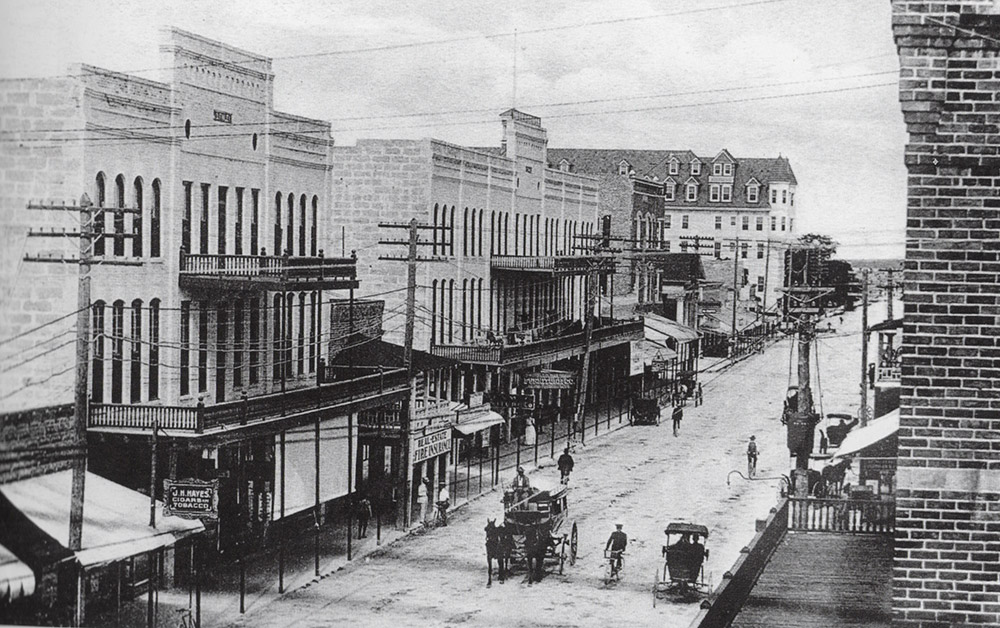
Flagler Street (1880s)
Image courtesy of Miami-History.com

In the late 1800s, industrialist Henry Flagler opened Miami’s first hotel on 12th Street- what is now known as Flagler Street. This hotel contributed to 12th becoming the City of Miami’s first main street. Beyond the hotel, you could find the original courthouse, dry goods shops and specialty stores, and the very first Burdines department store.

In 1921, 12th St. was renamed Flagler Street and became the North-South dividing line on the City of Miami’s grid-based street system. The Roaring Twenties cemented Flagler Street’s role as the vibrant hub of Miami, while a land boom more than doubled the city’s population and gave rise to iconic nearby communities, such as Coral Gables, Miami Shores, and Hialeah.

Flagler-Street (1910-1920s)
Image courtesy of Miami-History.com

By the 1930s, Miami and the rest of the U.S. had fallen into the Great Depression. Miami’s allure as a warm-weather paradise allowed it to fare better than many cities. Flagler Street continued to thrive and the city’s first modern skyscraper, the Historic Alfred I. DuPont Building, was erected in 1938. Tourism took off with the fledgling aviation industry. Pan American and Eastern Airlines headquartered here and opened routes that connected Miami to the world.

The end of World War II brought an unprecedented epoch of prosperity to Miami. From the 1950s through the late 1960s, Flagler Street was the most prestigious business address and the most stylish retail street in Miami. Burdines was famous for its pink and aqua décor, rooftop Ferris wheel, and elegant tearoom. Stores stayed open at night, and crowds thronged the dozens of theaters built on the ground floors of office buildings, including the 1500-seat Olympia Theater.

Busy Flagler Street, Miami, FL
Image courtesy of Miami-History.com

In the 1970s, combined with residents moving to the suburbs, downtown retail districts across America gave way to suburban malls. Downtown Miami became largely sustained by an influx of Cuban refugees, who opened and patronized businesses on Flagler Street. The late Tony Alonso, a former Miami DDA board member, was the cornerstone of a movement to bring Flagler Street back to its former glory. At his urging, business owners, property owners, residents, and other stakeholders created the Flagler Street Task Force under the auspices of the Miami DDA. The original group of Downtown stakeholders first met in June 2011.

In 2014, in a show of solidarity, property owners agreed to self-taxation to provide seed money for an ambitious revitalization project. A year later, due to lobbying efforts on behalf of the Miami DDA, Miami-Dade County approved funding of $6 million through an Economic Development Fund. The following year, the City of Miami dedicated an additional $6 million to bring the project total to $13 million.

The project will upgrade the half-mile stretch of Flagler Street from Biscayne Boulevard to the Miami-Dade County Courthouse, following a proven model of redevelopment already demonstrated by Lincoln Road, Ocean Drive, and Sunset Drive in Miami-Dade County, and other great main streets around the world. A pedestrian-friendly, landscaped streetscape will reclaim the street’s legacy as the vibrant retail and business core of Miami. The deteriorated sidewalks will be replaced with broad, accessible, landscaped pedestrian walks that encourage cafés and nightlife, and a unique system will enable sections of the street to be blocked off for events and festivals.

Construction began on the first section, from NW 1st Ave to NW Miami Ct. in 2016. By 2017, the first phase, up to S. Miami Ave was complete. However, the City and stakeholders were not satisfied with the contractor, so the project was put on hold and a new contractor was procured. In the meantime, Mana Miami and the newly formed Flagler District BID explored upgrading the project, materials and utilities, and re-envisioning the corridor as a curbless, festival street. After lobbying efforts, both the City and the County made additional investments totaling $13 million, to bring the total project budget to $27 million.

In revitalizing and improving Flagler Street, the project will fulfill the expectations of over 92,000 downtown residents, 250,000 workers, and visitors who desire the advantages of a dynamic urban center. As such, the Flagler Street Task Force project is more than a return to the street’s past glory. It will make history in its own right by giving rise to a dynamic downtown worthy of a great city.
Flagler Street at Night
Image courtesy of Mana Miami

Project Description: Original & New Design Concept

Original Design Concept

07-02-2014-CurtisRogers-Flagler-Streetscape-presentation.jpg

Image courtesy of Curtis + Rogers Design Studio

 The original design concept for Flagler Street’s revitalization was created by Curtis & Rogers Design Studio and was intended to reflect the rich history of the railroad’s importance in the development of the city. Beyond widening the sidewalks and planting shade trees to create a more pedestrian-friendly retail destination, the sidewalk design echoes the repetitive bands of the railroad ties, as they make their way west to where the trolley once traveled towards the County Courthouse, and where a major train depot stood. The proposed sidewalks are concrete, with aggregate (small stone and sand) mixed in, to give it some variation of tone and reflect the roughness of the strong pioneers that founded this city, and also help to hide some of the dirt that naturally accumulates on such a highly trafficked street. Embedded flush with the sidewalk between the pavers and the rest of the sidewalk is an actual steel railroad tie, aged and oxidized – a tangible reference to Flagler’s Railroad.  With foot traffic, the rails can become shiny in places.

The corridor design also integrated innovative techniques with the implementation of Silva Cells.  Silva Cells are a modular suspended pavement system that uses soil volumes to support large tree growth and provide powerful on-site stormwater management through absorption, evapotranspiration, and interception.  The beneficiary of these Silva Cells is the 100 Live Oak shade trees that were to be planted along the corridor.  Live oaks are excellent native canopy trees that are wind resistant, salt-tolerant, and have a long life span.  Date palms were to be placed at intersections to allow for more visibility.  All lighting along the corridor would be upgraded to energy-efficient LED lights.  Finally, railroad crossing gates would be installed at intersections, which would allow individual blocks to close vehicular traffic for community gatherings, festivals, special events, outdoor concerts, and family evenings throughout the year.

New Design Concept

04-Flagler-Empty.jpg

Image courtesy of Mana Miami

The City of Miami’s Office of Capital Improvements, in partnership with the Flagler District BID and the Miami Downtown Development Authority (Miami DDA), is working to transform Flagler Street into an iconic, festival-style boulevard and enhance its operations and activities. The main objectives of this project are:

  • Create a festival street from Biscayne Boulevard to NW 1st Ave by raising the road to the same grade as the sidewalks, changing it to a curbless street, and adding pavers in the vehicular travel lanes.
  • Deliver an enriched pedestrian experience with expanded sidewalks, large shade trees, outdoor café dining, improved LED lighting, signage, public art, and seating.
  • The new corridor will have the ability to close individual blocks to vehicular traffic for community gatherings, festivals, farmer’s markets, art fairs, and family evenings throughout the year.
  • Minimize on-street parking to maximize pedestrian space and Valet parking will be available, plus you will be able to park your car anywhere along the corridor and have it returned to you at your present location.
  • Upgrade existing drainage systems to prevent flooding.
  • Install new utilities – power, gas, fiber optics – to prepare for new vertical development and avoid the street being broken up once completed.
  • Improve the quality of life through a safer and more attractive shared space providing opportunities to increase patronage to existing businesses, attract new businesses, spur economic growth, and make Flagler Street a Downtown Miami cultural and commercial destination once again.

Maintenance of Traffic (MOT)

  • Sections C & D: E 2nd Avenue to Miami Avenue

 Maintenance of Traffic (MOT) - Sections C & D(PDF, 2MB)

Parking Options During Construction

Virtual Community Meeting

The City of Miami’s Office of Capital Improvements, in partnership with the Miami Downtown Development Authority (DDA), the Flagler District BID and Miami-Dade County, held a virtual Community Meeting on Wednesday, April 21, 2021 at 10am. At this meeting, City staff and their team of consultants/contractors shared the design plans, project construction schedule, maintenance of traffic plans, dates, and stakeholder concerns for the project.

View a pdf of their presentation(PDF, 3MB).

Frequently Asked Questions (FAQs)

When will construction start for the Flagler Beautification project?

Construction is anticipated to start in the first week of May 2021.

How long will the project take?

The project is anticipated to take between 40 to 50 months in duration (3-4 years). This is subject to change due to adverse weather, unknown underground utilities, coordination with Florida Power & Light (FP&L), and/or other unexpected circumstances.

Will Flagler Street be closed during construction?

Yes to vehicular traffic only within the work zone per section.

Will I have access to businesses on Flagler Street during construction?

Yes, access to businesses (pedestrian traffic) on Flagler will be open during normal business hours.

Will I have access to utilities during construction?

Yes, per the construction phases indicated above, the utilities will be fully operational. There will be daily announcements if the construction work programmed for a specific day will affect the utilities in the neighborhood.

Project Questions/Comments?

Comments or Questions?

Write us an email to submit questions/comments to info@miamidda.com